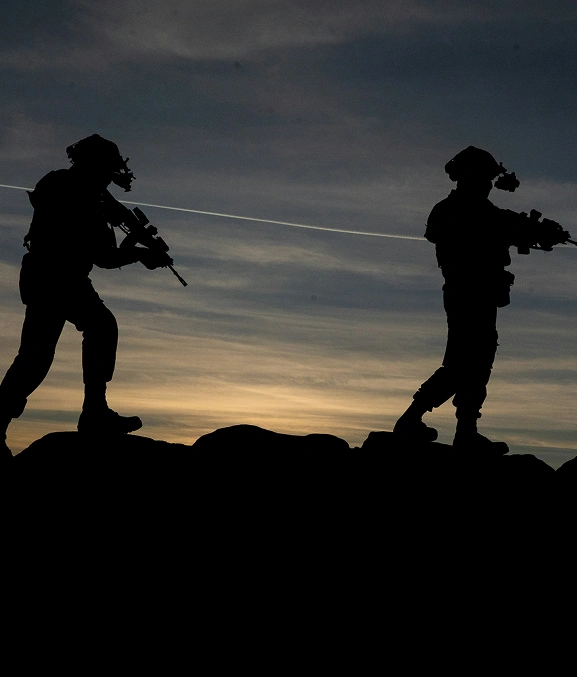
Your teams operate abroad, sometimes in unstable environments where standard insurance policies lapse at the first serious incident. Geodesk safeguards their travel and field assignments—including in sensitive areas and war zones—by covering both accidental risks (safety) and malicious acts (security). As a 100% international broker for 30 years, Geodesk designs customized coverage and coordinates assistance and evacuation when the situation requires it, anywhere in the world.
Field safety refers to the protection of your employees against unforeseen and accidental events that occur while on assignment: traffic accidents, sudden illness, epidemics, natural disasters, and medical incidents requiring hospitalization or repatriation. These events are considered unintentional risks and, in most policies, are covered provided that the coverage limits, geographic scope, and repatriation coverage have been appropriately established.
Field security refers to protection against intentional and malicious acts: assault, kidnapping for ransom, terrorism, riots, civil unrest, sabotage, or acts of war. Insurers treat these risks very differently: under French law, Article L121-8 of the Insurance Code excludes by default damages related to foreign war, civil war, riots, and popular uprisings, “unless otherwise agreed.” In other words, without a specifically negotiated extension, an employee working in a region that descends into conflict may find themselves without coverage for precisely what employers fear most. Distinguishing between “security” and “safety” is not merely a matter of semantics: it is the dividing line that separates, in a contract, what is actually covered from what is not.
A risk that is often underestimated. Geodesk understands the reality on the ground.
An employee on assignment in Nepal is suspected of having typhoid fever. Because a Geodesk representative was already familiar with the case, the response was initiated in less than an hour: medical referral, coverage of expenses, and coordination of follow-up care. In a remote location with a significant time difference, this responsiveness makes the difference between a controlled incident and a chaotic evacuation.
A country initially classified as safe suddenly deteriorates and is moved to the “red zone” on the list issued by the Ministry of Europe and Foreign Affairs. Without an appropriate policy extension, some insurers suspend all or part of their coverage—including assistance—as long as travel to the country remains discouraged. Geodesk anticipates this shift in advance by negotiating coverage for passive risk (the employee who is a victim but not a participant in the conflict) and by clarifying which coverage remains in effect when the situation becomes tense.
In complex and persistently unstable environments, a medical or security evacuation cannot be improvised: it requires a support team available 24 hours a day, local contacts, logistical coordination, and a detailed understanding of the country’s constraints. Geodesk manages these situations alongside organizations that operate in the most demanding contexts, from Afghanistan to crisis-stricken areas.
From 24/7 medical assistance to medical repatriation and safe evacuation, Geodesk offers coverage tailored to every emergency situation. From the initial call to a safe return, we provide a comprehensive chain of assistance to protect your employees anywhere in the world.
Most contracts exclude acts of war by default. Geodesk negotiates an extension that covers your employees’ liability risk and clarifies, line by line, exactly what the coverage entails in sensitive areas.
Medical repatriation—a critical coverage provision that varies significantly from one policy to another and from one country to another—is thoroughly reviewed by Geodesk: medical evacuation, repatriation of remains, early return due to a serious family emergency, and the availability of a responsive support platform.
An emergency in the field doesn't give you any warning. The assistance provided by Geodesk operates around the clock, with medical staff on hand and consideration given to time zone differences and local languages, ensuring immediate care regardless of the country where the mission is taking place.
Beyond medical considerations, certain situations require the evacuation or relocation of an employee who is in danger. Geodesk establishes safe evacuation protocols and crisis management systems to ensure that a response is in place before an incident occurs—not improvised during one.
Locally hired staff are all too often overlooked in international contracts. Geodesk systematically verifies their coverage and fills in the gaps, ensuring that protection isn’t limited to expatriates alone.
For high-risk locations, the risk of kidnapping for ransom and the protection of executives and key personnel are covered by specialized insurance policies. Geodesk designs these specific coverage options and integrates them with the rest of the program.
With 30 years of experience specializing exclusively in international business, Geodesk covers more than 150 countries and draws on in-depth knowledge of international insurance markets and a network of partners located around the world. This expertise allows us to precisely address the areas that generalist policies tend to avoid.
A dedicated contact person manages your case from the initial contact through to the incident, without relying on an anonymous platform. Depending on the circumstances, your teams communicate directly with the relevant specialists—such as those handling operations in high-risk areas, ISO 31000 compliance, kidnapping and ransom, and expatriation—who are already familiar with your situation when it counts most.
In the field, every hour counts. Geodesk provides 24/7 support and responds immediately in an emergency, because a case that’s already on file can be handled faster than one discovered in the heat of the moment.
Geodesk draws on strong partnerships with insurance companies, recognized legal expertise—including a publication by the CDSE (Cercle des Directeurs de Sécurité des Entreprises)—and constant monitoring of global news. Analyze, anticipate, and mitigate: three key strategies for preparing for the unpredictable in environments that can change in a matter of days.

Geodesk maps your areas of operation, identifies geographic exclusions, areas with evolving risks, and the relevant profiles (expatriates, local employees, consultants, spouses, and children) to design coverage that aligns with your operational reality.

Each policy is negotiated and tailored to the client’s needs: coverage for war risks, limits on medical and intensive care expenses, deductibles, waiting periods, and evacuation and repatriation coverage. There are no standard policies—only custom-tailored ones.

Geodesk sets up the system, issues certificates on time—even for resignations announced at the last minute—and equips your HR teams with the tools they need to handle emergency procedures and file claims.

The relationship doesn't end with the signing of the contract: we monitor changes in the areas, conduct regular follow-ups, handle crises, and provide a dedicated contact person who is available around the clock.
Analysis of Your Needs
Geodesk maps your areas of operation, identifies geographic exclusions, areas with evolving risks, and the relevant profiles (expatriates, local employees, consultants, spouses, and children) to design coverage that aligns with your operational reality.
Solution Architecture
Each policy is negotiated and tailored to the client’s needs: coverage for war risks, limits on medical and intensive care expenses, deductibles, waiting periods, and evacuation and repatriation coverage. There are no standard policies—only custom-tailored ones.
Deployment
Geodesk sets up the system, issues certificates on time—even for resignations announced at the last minute—and equips your HR teams with the tools they need to handle emergency procedures and file claims.
Follow-up & Support
The relationship doesn't end with the signing of the contract: we monitor changes in the areas, conduct regular follow-ups, handle crises, and provide a dedicated contact person who is available around the clock.
URD Group
Le Groupe URD
“Dans le cadre de nos activités de think-tank de l’humanitaire, nous sommes souvent amenés à nous déplacer au cœur de terrains en crise. Nous avons toujours pu compter sur l’expertise et l’assurance de GEODESK »
Pain Without Borders
Pain Without Borders has been using Geodesk's services for several years. Geodesk regularly provides us with insurance solutions tailored to our experts' missions in our various areas of operation, particularly in Ukraine, Ivory Coast, and Mozambique. Communication is always smooth, quick, and efficient, and we are fully satisfied with our collaboration and the availability of our account managers. "
A. Lefevre
HR Director
“The travel of Better with Water employees is essential to the success of our field missions. Having a reliable insurance partner allows us to support them with peace of mind, wherever they are working. The quality of the support, the responsiveness of the teams, and the coverage tailored to our needs are a real asset for our organization and for the safety of our employees.”
X.ARNOULT
HR Director
“For several years, Geodesk and IECD have been developing a structured partnership to benefit the social protection of employees on international assignments. Present in 18 countries, IECD works to promote access to education, employment, and entrepreneurship. Geodesk's support helps to secure these initiatives in sometimes complex or fragile environments, particularly in Lebanon and Madagascar. This long-term partnership is based on a strong and shared relationship of trust between IECD and Geodesk, serving their common commitments on the ground.”
Reporters Without Borders
“RSF has been working with Geodesk for several years. We particularly appreciate the quality of their personalized support. Their teams are always responsive, available, and attentive to our needs. We appreciate their follow-up and always enjoy communicating with them.”
Jean-Paul SCHÜTZ
Principal
“The Lycée Français Alexandre Dumas in Moscow , a school directly managed by the AEFE (Agency for French Education Abroad), places the safety and well-being of its students at the heart of its priorities. This is why we attach paramount importance to the quality of the school insurance we have purchased from CGEA GEODESK. Our school welcomes over 660 students, from preschool to the final year of high school, from numerous nationalities and spread across three separate campuses. In such a demanding international environment, we need a reliable partner. CGEA GEODESK fully meets this requirement. The “INTERNATIONAL STUDENT SCHOOL INSURANCE” coverage protects our students during school hours, on educational outings, and during all extracurricular activities organized by the school, thus providing continuous protection tailored to our daily lives.”
Eight out of ten organizations believe their teams are covered in the event of a conflict; the contractual reality is often different. This video explains the war exclusion clause, the distinction between passive and active risk, and the phrase “directly or indirectly,” which allows an insurer to deny coverage as soon as a conflict is underway in the region.
Diagnostics, extensions, and devices designed for operations and deployments in sensitive areas and war zones.
24/7 platform, medical evacuation, repatriation of remains: coverage that proves its worth when it counts most.
Assistance with an employee's return home due to a serious family matter, a security incident, or a deterioration of the local situation.
Structuring your travel risk management to strengthen and document your duty of care.
Protection of executives and key personnel who are at risk in connection with international decisions and transactions.
Death benefit, spousal and education annuity, disability, and incapacity coverage for employees on assignment.
Insurance coverage includes accidental and unforeseen events (accidents, illness, epidemics, natural disasters), which are generally covered under international contracts. Security covers intentional and malicious acts (assault, kidnapping, terrorism, riots, war), which are very often excluded by default. A policy may therefore provide full coverage for appendicitis incurred while on assignment, yet leave your employee unprotected in the event of war: it is this distinction that Geodesk prioritizes in its audits.
Under French law, Article L121-8 of the Insurance Code excludes, by default, damages related to foreign war, civil war, riots, and popular uprisings, unless otherwise agreed. Without a specific extension of coverage, costs directly related to an act of war are excluded, and some insurers suspend all or part of their coverage (including assistance) as long as the country remains classified as a “zone not recommended for travel.” Geodesk negotiates the necessary coverage extension in advance to avoid this blind spot.
Passive risk refers to a situation in which an insured person is a victim of a conflict without taking part in it; active risk refers to active participation in hostilities. Many policies exclude only active participation, but some broader wording suggests that a mere passive witness would not be covered. Geodesk carefully reviews this wording, as it determines whether your employee—as a mere victim—will be compensated or not.
Many contracts exclude damages resulting “directly or indirectly” from a conflict. This wording is particularly tricky: it allows the insurer to deny coverage as soon as a conflict exists in the region, even if the incident in question is not an act of war in the strict sense—such as a fracture sustained during a hasty evacuation. Geodesk identifies these clauses and either asserts or renegotiates more protective wording.
No. High-end insurance policies systematically exclude acts of war, civil war, riots, and popular uprisings, and their coverage limits become ineffective as soon as a conflict is involved. They can supplement a travel insurance plan, but they can never provide security for a professional assignment in a sensitive area.
This is a classic blind spot: a policy may cover the destination country but not a transit country crossed along the way. Geodesk verifies coverage for the entire route—including stopovers and transit points—and not just the final destination.
Often not, even though they are sometimes the most at risk. Geodesk systematically verifies the coverage of local staff, as well as that of consultants, contractors, expatriates, spouses, and children, to ensure that no one is left out of the program.
ISO 31000 is neither mandatory nor a certification standard: it is a set of guidelines for managing travel-related risks, applicable to all types of organizations (companies, NGOs, schools, institutions). In the event of a dispute, a system aligned with this standard and properly documented helps demonstrate that the employer has fulfilled its duty of care, which is a significant obligation toward employees traveling on business.
The K&R insurance policy covers the consequences of a kidnapping for ransom and, depending on the terms of the policy, provides crisis management and negotiation expertise. In high-risk areas, it is integrated with coverage for key personnel and executives (D&O). Geodesk structures these specific coverages and coordinates them with the rest of the policy.
No. An isolated act of terrorism may be covered under a separate provision or extension, whereas a widespread armed conflict falls under the war exclusion. Confusing the two can lead to an overestimation of your coverage. Geodesk clarifies what each provision covers so that you know exactly what you can count on.
Even with an active policy, an insurer may invoke force majeure or technical impossibility when access to an area becomes impossible. That is why the operational quality of the assistance center, its local partners, and its evacuation capacity are just as important as the terms of the contract. Geodesk assesses this actual capacity, not just the coverage on paper.
We use cookies to personalize content, provide social media features, and analyze our traffic. We also share information about your use of our site with our analytics partners. You can change your preferences at any time. For more information, please see our Privacy Policy and Cookie Policy.