Our Expertise
Geodesk safeguards business assignments with customized insurance coverage for unstable, sensitive, and war-risk areas. As a 100% international insurance broker for 30 years, Geodesk combines insurance coverage, on-the-ground security measures, and compliance with the employer’s duty of care to protect your employees, expatriates, volunteers, and consultants in more than 150 countries, 24 hours a day, 7 days a week. Where a standard policy excludes a particular destination, Geodesk tailors coverage to meet your needs.
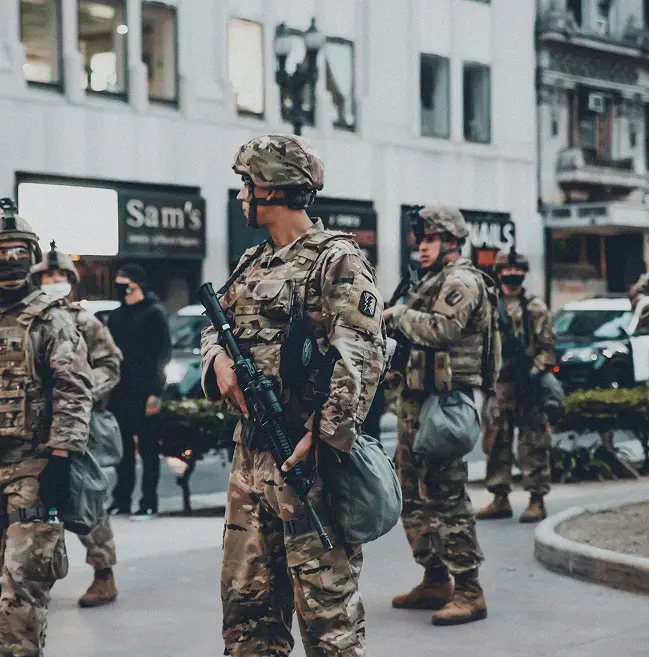
The Ministry of Europe and Foreign Affairs classifies each destination according to four alert levels (green, yellow, orange, and red), and most international insurance policies simply exclude the top two levels.
In practical terms, as soon as an employee enters an orange zone (“not recommended unless absolutely necessary”) or a red zone (“strongly discouraged”), the repatriation coverage and medical expense reimbursements under a standard policy may become void—precisely when the need for protection is greatest.
Geodesk steps in to fill this gap: the broker negotiates extensions and specific contracts that take effect where standard coverage ends, in accordance with the employer’s legal obligation to ensure safety.
War risk insurance covers bodily injury and property damage caused by armed conflict, insurrection, riots, or acts of terrorism—events that Article L121-8 of the Insurance Code authorizes insurers to exclude by default from their policies.
Geodesk is negotiating the removal of this exclusion in the form of a dedicated extension, distinguishing between “passive” risk (when an employee is affected by a war-related event without participating in it) and “active” risk—which is rarely insurable—in order to tailor coverage that reflects the reality of your assignment rather than a standard clause.
Assistance and evacuation insurance covers the extraction of an employee from an area that has become dangerous, whether due to a medical, safety, or political evacuation, or a natural disaster—four situations with distinct operational rationales.
Geodesk systematically verifies an issue that most organizations discover too late: the availability of transit and overflight clearances, since an evacuation that has been technically funded can still be grounded due to the lack of approval from a neighboring country or a viable air corridor.
Kidnapping & Ransom Insurance covers the costs associated with a kidnapping, extortion, or detention by funding the services of specialized negotiators and reimbursing the ransom paid by the company, under a model in which the insured advances the funds and is then reimbursed. Geodesk structures these policies in strict compliance with French law and international sanctions regimes, as the absolute confidentiality of the insurance policy is itself a prerequisite for its operational effectiveness.
The field security component complements insurance through prevention: pre-departure threat analysis, security protocols for the mission, and support for monitoring teams once on site. Geodesk integrates this aspect with insurance coverage because no policy, however comprehensive, can replace a system that first and foremost reduces the likelihood of a loss occurring, based on the team’s ongoing monitoring of geopolitical developments.
Crisis management support provides your organization with a centralized system for managing adverse situations: a crisis response team, a decision-making chain, and alert and reporting procedures.
Geodesk thus addresses a common shortcoming among security and risk managers, who rarely have a single command center when multiple employees are simultaneously exposed in different locations.
Geodesk follows a method that the team applies to every mission in a sensitive area: analyze, anticipate, cover. “Analyze” means that no two situations are treated the same way.
The area of operation, local regulations, the profiles of the staff, and potential changes in the situation are examined one by one, as a country can shift from one alert level to another in a matter of days.
Anticipating relies on constant monitoring of global news, which allows us to foresee risks before they materialize rather than reacting after a disaster has occurred.
Every customer has a dedicated point of contact, from the initial contact through to a claim, with no anonymous phone numbers or impersonal intermediaries.
Geodesk’s reliability is based on strong partnerships with insurers, recognized legal expertise—as evidenced, in particular, by publications in the Cercle des Directeurs de Sécurité des Entreprises (CDSE)—and practical experience in the most complex environments.
The broker will conduct a free audit of your current international coverage and identify your risk areas in less than 48 hours, with no obligation and in complete confidentiality.
“After years of working with GEODESK, we remain just as satisfied with their management of our contracts and their proactive approach to the new challenges of a changing world. Their contribution was particularly crucial during difficult times, and their responsiveness was a valuable asset in enabling us to act as quickly as possible.”
F.-X. Gicquel — Director of Operations, SOS Chrétiens d’Orient
Article L121-8 of the Insurance Code authorizes the insurer to exclude, by default, damage caused by foreign war, civil war, riot, or popular uprising.
War risk insurance involves reinstating this coverage through a dedicated endorsement. The industry distinguishes between “passive” risk—where an employee experiences a war-related event without participating in it, which is insurable—and “active” risk—direct participation in hostilities, which is almost never covered.
The distinction between terrorism and acts of war is also crucial, as the same event may fall under one or the other classification depending on the contract’s wording, with opposing consequences for compensation. Geodesk tailors these clauses so that the coverage reflects the actual nature of the mission rather than a standard definition.
Article L4121-1 of the Labor Code imposes a duty of care on employers toward their employees, including when they are on assignment abroad. Sending an employee to a high-risk area without a formal risk assessment, appropriate preventive measures, or protective equipment exposes the organization to civil—and even criminal—liability. This duty of care requires a documented risk analysis, a safety plan, and insurance coverage consistent with the actual destination. The international standard ISO 31030:2021 provides the framework for organizing this process; it serves as a guide to best practices rather than a certifiable standard, a point that Geodesk details on its page dedicated to ISO 31030 compliance.
An evacuation actually encompasses four distinct situations: medical evacuation (health-related), safety evacuation (direct threat to people), political evacuation (sudden deterioration of the situation), and evacuation due to a natural disaster. Each is governed by different timelines, resources, and decision-makers. The aspect that organizations most often underestimate is not the cost but the feasibility: an evacuation that is technically feasible may still be blocked if land transit or overflight authorizations are not obtained from the relevant governments, or if no viable corridor exists at the critical moment. Geodesk verifies these conditions in advance and relies on a support platform available 24 hours a day, 7 days a week—without which any guarantee of evacuation remains purely theoretical.
French law does not, as such, criminalize the payment of a ransom intended to secure the release of a hostage. However, Article 421-2-2 of the Penal Code criminalizes the financing of a terrorist enterprise, and the sanctions regimes of the U.S. OFAC and the European Union prohibit any transfer of funds to a listed entity or individual. A misdirected payment can therefore expose the company to legal action, regardless of any humanitarian intent. This is why a Kidnapping & Ransom policy always includes specialized negotiators and a compliance review, and why confidentiality is a fundamental requirement: mere knowledge of its existence by a third party would reduce its effectiveness and could increase the risk.
A country’s official classification is revised as soon as its security conditions change significantly—sometimes within a matter of hours—and a single territory may have multiple classification levels depending on the region.
Relevant coverage therefore cannot be set in stone at the time of signing: it must account for areas with evolving risks, cover transit countries—not just the final destination—and include activatable extensions for destinations where conditions deteriorate during the assignment. Geodesk incorporates this factor right from the audit stage by cross-referencing existing contracts with the actual travel patterns of your teams, and complements the system with operational protocols such as registration in the Ariane registry of the Crisis and Support Center.
Geodesk systematically analyzes the actual geographic scope of the policy and the exact list of its exclusions, as well as the consistency between employees’ status and the associated coverage—not to mention often-overlooked profiles such as:
We review a range of factors to consider in order to gain a clear picture of your situation: medical reimbursement limits relative to the actual cost of a local hospitalization, the quality and responsiveness of assistance across time zones, regulatory compliance in each country of assignment, and the robustness of the medical repatriation coverage.
This audit is conducted free of charge, with no obligation, and in complete confidence, with a report identifying risk areas provided within 48 hours.
*Offered depending on the type of company and the country of assignment
We use cookies to personalize content, provide social media features, and analyze our traffic. We also share information about your use of our site with our analytics partners. You can change your preferences at any time. For more information, please see our Privacy Policy and Cookie Policy.